
Fukuyama transitioned from a fishing village to a prominent castle town and industrial hub, significantly evolving since the Edo period. Despite being largely rebuilt after World War II, it offers attractions like the Fukuyama Automobile and Clock Museum and beautiful cycling routes. However, it may not warrant a dedicated trip.
AI was used in the research of the factual content used below with subsequent editing.
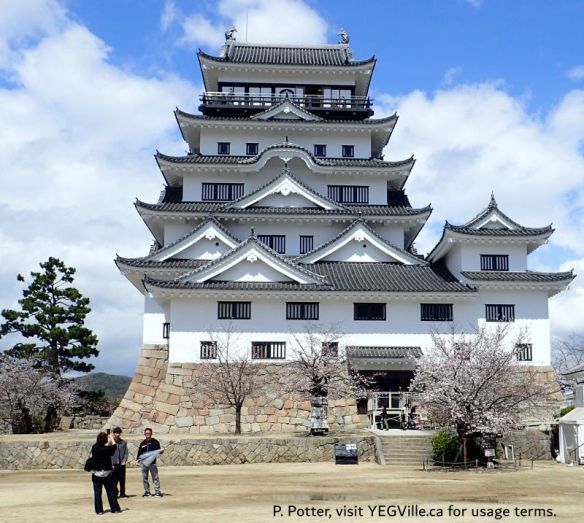
Fukuyama’s story begins as a small fishing village that transformed dramatically after the construction of Fukuyama Castle (1619–1622), becoming a thriving castle town and commercial port during the Edo period. Over the centuries, it evolved into a major industrial center, particularly in the 1960’s. The current infrastructure is more impressive when one considers that 80% of the city was destroyed in a single air raid on August 8, 1945, a week before Japan’s surrender.
Strategic Location
Water and politics are central to Fukuyama’s importance. The local tides are shaped by the narrow island channels of the Seto Inland Sea, creating fast‑moving currents, strong tidal swings, and occasionally swirling flows that have influenced navigation for centuries. These conditions make the area’s tides more dynamic and complex than those along Japan’s open coasts. Historically, sailors relied on local knowledge to “ride the tide” safely through these waters for fishing or exchanges with Korea or China.
Inland, the Imperial San’yōdō Highway ran directly through the area. Control of Fukuyama resulted in monitoring military movements, information flow, efficient administration, taxation of travelers and a natural logistical and political hinge.
A Nice, Industrial Place to Visit
So, is Fukuyama worth a special trip? Not really. If you are on tour of Japan, it is good for a day or so to visit the castle. If you are into old cars, antiques or valuable junk, then the Fukuyama Automobile and Clock Museum is worth stopping by.
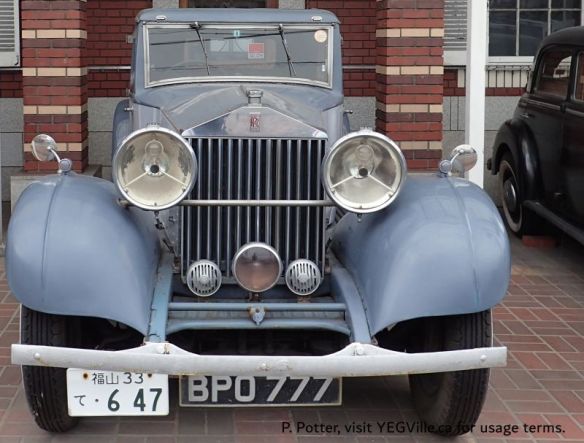
Rolls Royce, Fukuyama Auto and Clock Museum, 2026-04-01, P. Potter. 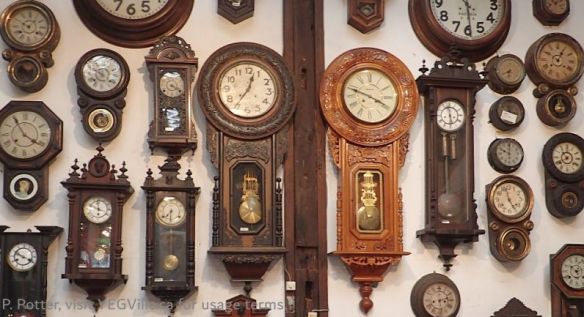
A small selection of clocks, Fukuyama Auto and Clock Museum, 2026-04-01, P. Potter. 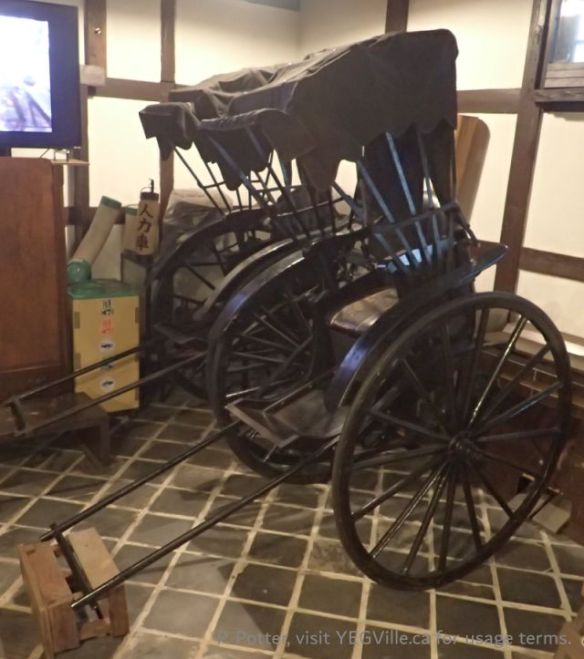
Rickshaws, Fukuyama Auto and Clock Museum, 2026-04-01, P. Potter. 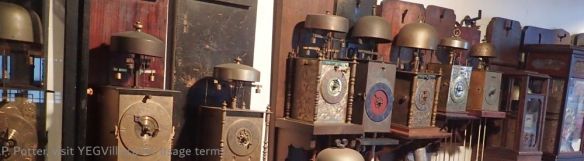
Clocks, Fukuyama Auto and Clock Museum, 2026-04-01, P. Potter. 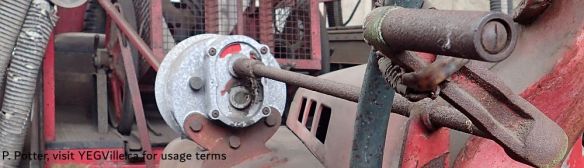
Pity the left arm of the fireman turning the siren, Fukuyama Auto and Clock Museum, 2026-04-01, P. Potter.
If roses are your thing, then they plant about a million a year and are on the world rose circuit. If you are a cyclist, it is a good beach head to access the Shimanami-Kaido cycling system.
In other words, there are lots of good specific reasons to visit Fukuyama. To save you the trip, flip through the gallery below for vistas of the city within walking distance of the downtown core.
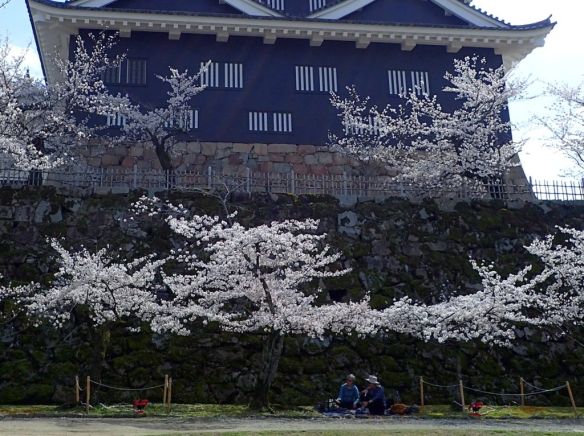
A couple picnicking under the cherry blossoms, Fukuyama Castle, 2026-31-31, P. Potter. 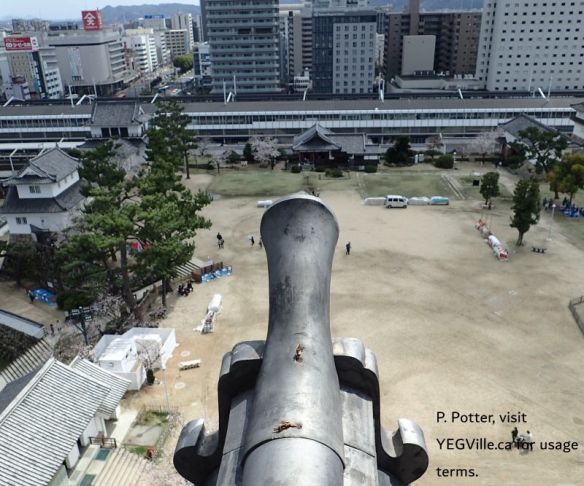
Looking south from the castle towards the train station and city, Fukuyama Castle, 2026-31-31, P. Potter. 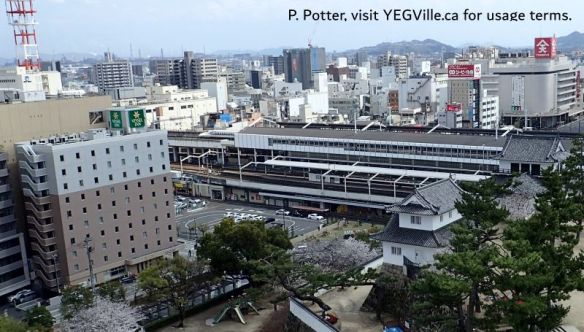
Looking Southeast from the Fukuyama Castle grounds toward the train station, note the bullet train just entering it, 2026-03-28, P. Potter. 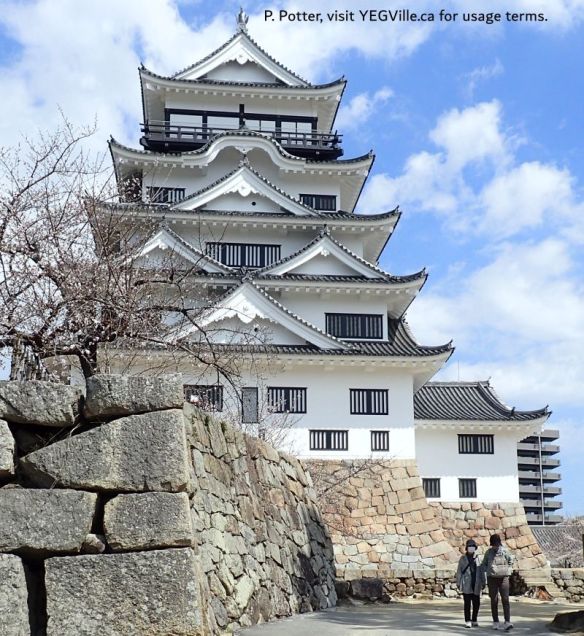
Looking east at the keep, Fukuyama Castle, 2026-31-31, P. Potter. 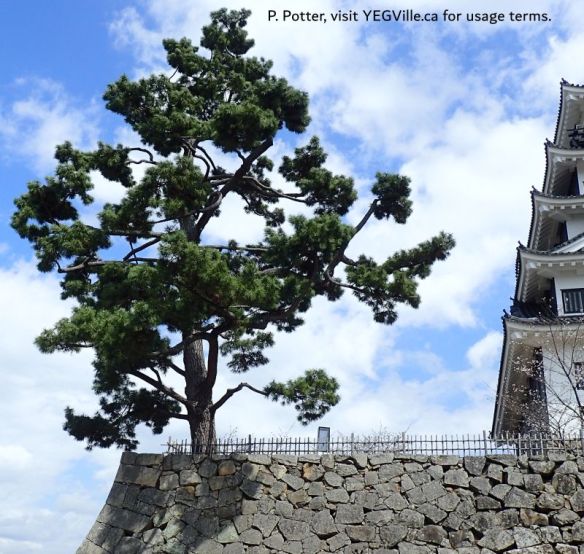
Pine tree with its lonely north looking vigil, Fukuyama Castle, 2026-31-31, P. Potter. 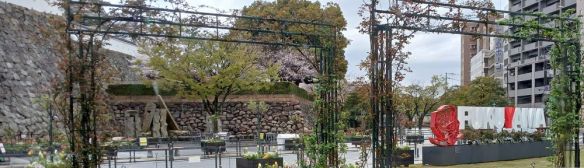
Small rose garden on the Southeast corner of the grounds, Fukuyama Castle, 2026-31-31, P. Potter. 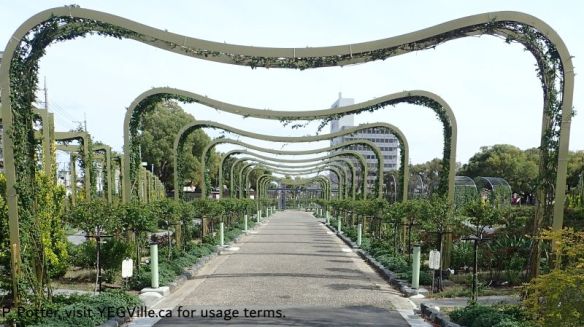
Rose garden (not yet in bloom), Fukuyama, 2026-31-31, P. Potter. 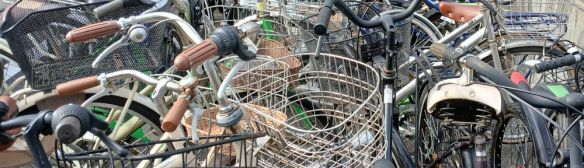
Used bikes at a local shop, Fukuyama, 2026-31-31, P. Potter. 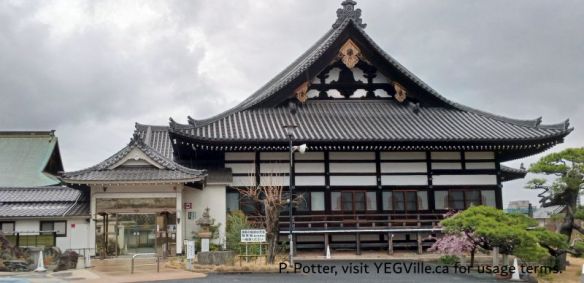
One of the buildings of the Fukuyama Hachimangu Shrine, 2026-04-01, P. Potter.
 YEG Ville