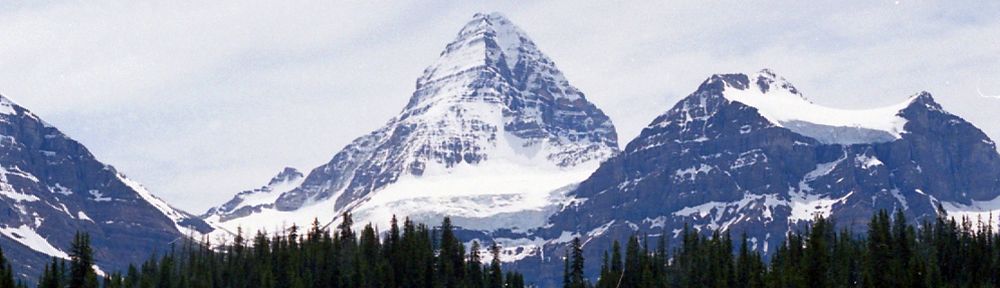
Some field notes from the Redwater River Natural Area in Alberta. An illegal shooting range yielded 175 spent shell casings and concerns about lead contamination from the range.
A slightly different post from the usual YEGVille fair. These are my notes on methodology and potential conclusions that can be drawn from them based on a site visit to Redwater River Natural Area.
Setting the Scene
Redwater River Natural Area was established as early as 1971. It is part of a cluster of eight natural areas (spread across eleven parcels) East of Hwy 2 and South of Hwy 18 and about 61 km North of the Wayne Gretzky statue (form which all YEGVille distances are measured). All of these sites (except for Halfmoon Lake) show signs of disturbances although this site is the worst of the lot. This was my third trip to this site (all in 2024).
The Canadian Broadcast Company was interested in doing a story on the legacy Government of Alberta Volunteer Stewardship program. I agreed to show the reporter, Madeline Cummings, a Protected Area site and Redwater River was a perfect example of what a Natural Area should NOT BE.
Disturbances on Disturbances
According to the neighbour to the North, this Natural Area has had problems for many years. They used to go in and clean it up but have since given up due to the repeated abuses. Calling the local RCMP detachment, according to the person, has also been ineffective. In the meantime, this family is at risk from an illegal shooting range.
This shooting-range is the most egregious disturbance on the site. The sandy soil supports a large colony of jack pine. These trees grow well spaced apart and the poor soil conditions results in a limited under story. Perfect for driving ATV through. Unfortunately, these tracks also disturb the thin growth on top of the sand.
Excavating the Story
Although forensic scientists will cringe at my crude methodology, this is how I extrapolated that there possibly 50,000 spent shell casings and upwards of 13 KG of lead on the site.
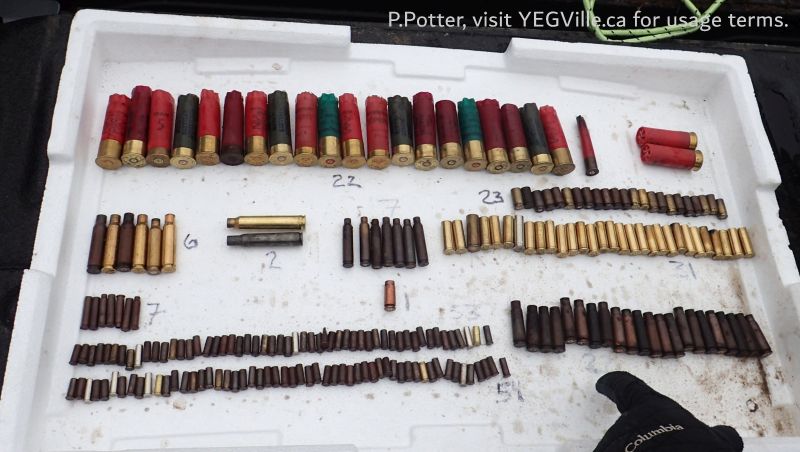
Four Square Feet. Empty shell casings lay strewn on the ground – but exactly how many? A simple survey was done in which a two areas were excavated, both approximately 2-square feet. From this excavation, 175 spent shell casings were recovered and 5 unspent shells.
50,000 Shells. A rudimentary calculation would suggest that there are about 44 spent shell casing and 1 unspent shell per square foot. The size of the range is 10,000 to 12,000 square feet (see the graphic in the gallery below for a map of the area). It is doubtful that there are upwards of a half million spent shells on the range. So, I am using a ‘spit-ball’ amount of about 50,000 or about 10% of the above estimate.
~500 Unspent Shells. In the same way, there are probably a few hundred unspent shells in the range based on this survey. Interestingly, the second area I excavated turned out to be a former campfire spot, likely extinguished by kicking nearby sand on it. So, what happens if you build a campfire on some unspent shells? Accordingly to Mythbusters, it probably won’t kill you but it might leave a nasty mark [1].
Don’t Drink the Water. But back to the shooting range. At the far end, trees have been cut down – not by saws or axes but by multiple shots. A rough and ready calculation would suggest that there is at least 13 kg of lead at the end of range [2]. This lead might be leaching into the water table and nearby wells.
Proper Shell Disposal. By the way, the five live shells (a six one was a ‘maybe’) were turned into the St. Albert detachment of the RCMP (thank you front counter ladies for the evidence bag, it was a nice touch!).
Not an Anti-Gun Post
So there you have it, a layman’s estimate of the impact on one of Alberta’s Natural Areas. Please take all of the calculations with the large grain of salt but I have done my best to under, rather than over, estimate.
Also, this is not an anti-gun post. I have never owned a fire arm but have take a half dozen Hunter Training courses over my life. I nearly had a perfect score when writing my restricted fire arms test ten or so years ago when I took it with my wife and son (who aspired to be a movie gun-wrangler – btw, my wife was the best shot out of the three of us).
While not a constitutional right, like in the US, responsible adults should be allowed to own guns for hunting and personal enjoyment. Canada’s current (or recently current) legislation had it about right balancing property rights against allowing weapons to be inadvertently or illegally accessed.
Not a YEG-Ville Destination
Hopefully this site will get cleaned up by a team with the skills to deal not only with the disturbances but also unspent shells and possibly 13+ kg of lead. Until this is done, my recommendation is to stay clear of this site. Having been on a few gun ranges (including in the military), this is not a range you want to get near to. There are no safety protocols and it appears shooting is happening from multiple spots in the Natural Area.
While it might be tempting to pick up a few shells as souvenirs, it is not worth the risk. Stay in bed!
Any maps and map views are for general information only. Do not rely on them for navigation or to determine legal boundaries.
(On smart phones, swipe to advance the pictures)

Looking South towards the shooting range, 2024-11-15, Redwater River NA (CBC Story), P. Potter. 
The Styrofoam block to the left measures approximately two square feet; the first excavation was done in the area to the right, 2024-11-15, Redwater River NA (CBC Story), P. Potter. 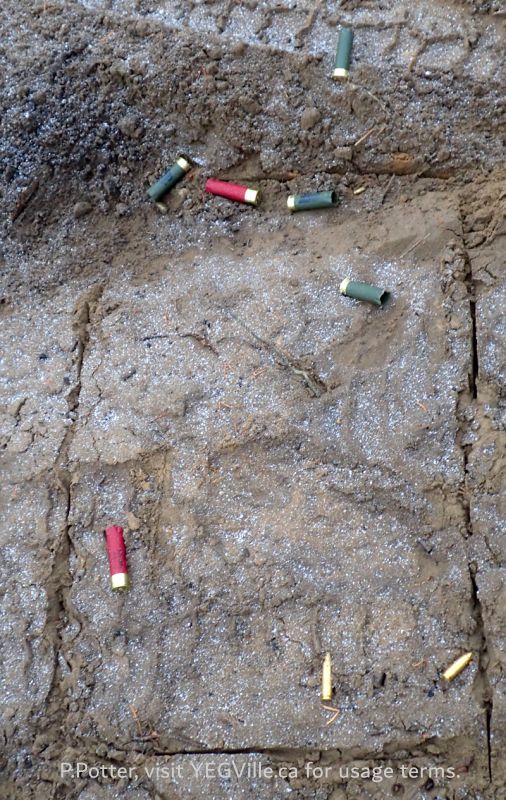
The outline of the first area to be excavated, 2024-11-15, Redwater River NA (CBC Story), P. Potter. 
Interim results from the excavation, 2024-11-15, Redwater River NA (CBC Story), P. Potter. 
Second area to be excavated (to the right of the block), 2024-11-15, Redwater River NA (CBC Story), P. Potter. 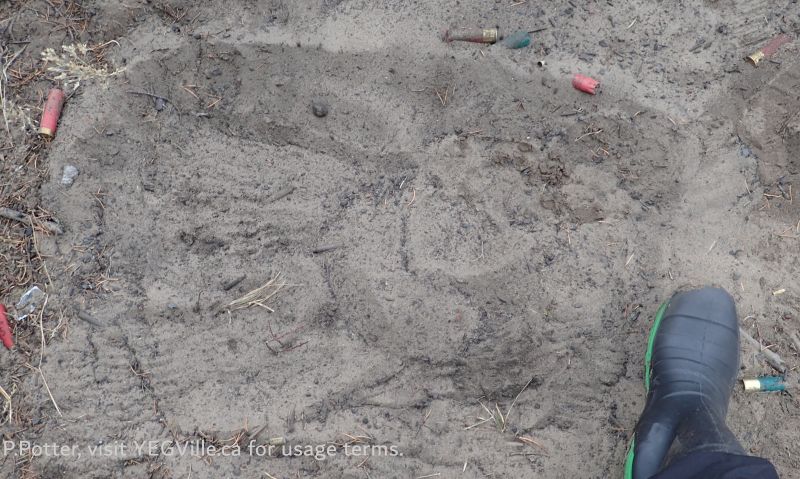
Second area excavated (size 10 boot on right), 2024-11-15, Redwater River NA (CBC Story), P. Potter. 
Initial wash of the shell casings, 2024-11-15, Redwater River NA (CBC Story), P. Potter. 
A volunteer sorts the casings by caliber and type, 2024-11-15, Redwater River NA (CBC Story), P. Potter. Showing the count of the spent casings, 2024-11-15, Redwater River NA (CBC Story), P. Potter. 
CBC Reporter, Madeline Cummings early Christmas Present, a box of spent shell casings, 2024-11-15, Redwater River NA (CBC Story), P. Potter. 
Five live rounds turned into the St. Albert RCMP detachment for disposal, 2024-11-15, Redwater River NA (CBC Story), P. Potter. 
A rough calculation of the extent of the shooting range, 2024-11-15, Redwater River NA (CBC Story), P. Potter.
Notes and Reference
- An Oven Plus Ammo – Mythbusters – S04 EP18. Mythbuster’s conclusion was that the shell casing was the more dangerous part of bullet in an open fire.
- Very happy to be corrected on the following calculations as I am not an expert in any of this:
- Assume there are 50,000 bullets in the trees of the shooting range ( 44 spent shells x 10,000 square foot range but reduced by ~90% to be conservative).
- There were 175 casings recovered of which 54 were 22 caliber or 30%; to be conservative, we are assuming that all of the shells were 22.
- A typical 22 caliber bullet contains 40 grains or 2.6 grams of lead.
- 50,000 x 2.6 grams = 129,600 grams or about 13 kilograms of lead at the end of the range.
Usage: This site is intended for my personal use only and very select invited guests. My recommendation is for you to stay in bed with the covers pulled firmly over your head.
 YEG Ville
Pingback: CBC Story – Volunteer Stewardship Program | SAPAA
Pingback: A Tale of Two Business Problems | Organizational Biology
Pingback: A Tale of Two Business Problems | Organizational Biology