
Kyoto, Japan’s ancient capital, is renowned for its rich cultural heritage, housing over a thousand temples and UNESCO World Heritage sites. Highlights include the stunning Kinkaku-ji (Golden Pavilion) and the serene Zen gardens of Kōdai-ji. Tourists often rent kimonos to experience traditional culture, enhancing their visit to this historic city.
AI was used in the research of the factual content used below with subsequent editing.
- Stumbling Around Kyoto in a Kimono
- 1,001 Buddah’s – But Who’s Counting
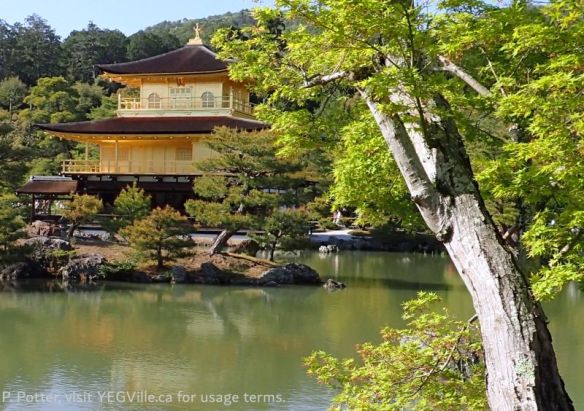
- The Much Copied Golden Pavilion
- Quiet and Crushing Crowds in a Zen Garden
Kyoto is about 40 KM from Osaka and a 12-minute Shinkansen (bullet train) ride. It was Japan’s imperial capital from 794 to 1869. The city preserves over a thousand shrines and temples, numerous National Treasures, and many UNESCO World Cultural Heritage sites.

Stumbling Around Kyoto in a Kimono
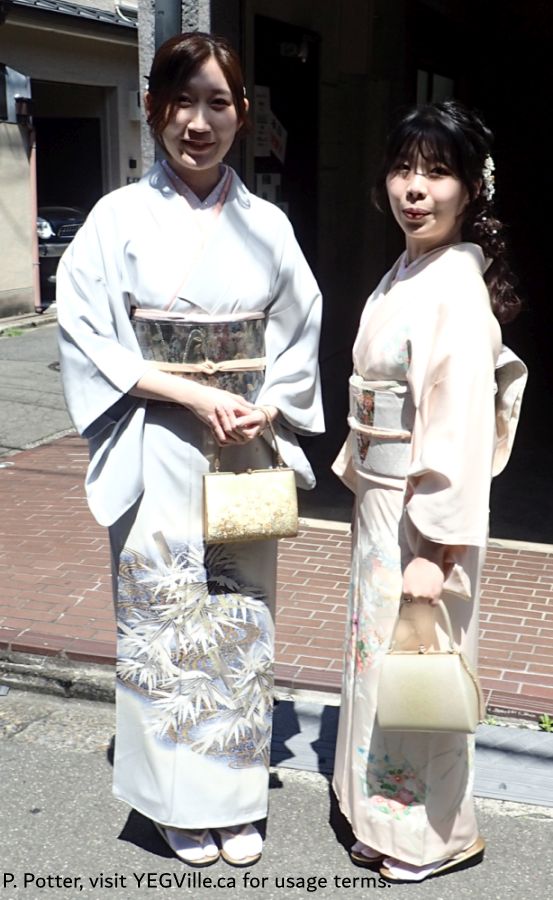
Travelers come to experience iconic temples, wooden machiya townhouses, seasonal beauty, traditional performing arts, and culinary culture rooted in centuries of refinement. An example of this immersion is the trend to dress in traditional kimonos and walk about town. At first glance, I thought it was a blended wedding. But after seeing dozens of kimono rental shops and witnessing hundreds of tourists wearing the traditional garb and stumbling around on Zōri sandals, it was obviously a ‘thing’.
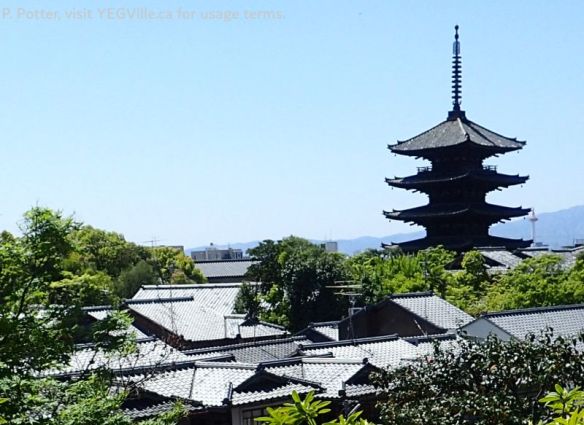
The tower poking above nearby buildings and trees, 2026-04-16, Toji Temple environ, Kyoto Japan, P. Potter. 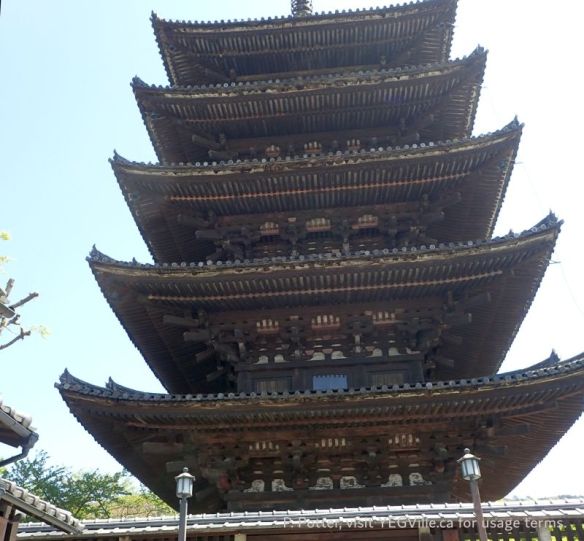
The iconic tower, 2026-04-16, Toji Temple environ, Kyoto Japan, P. Potter. 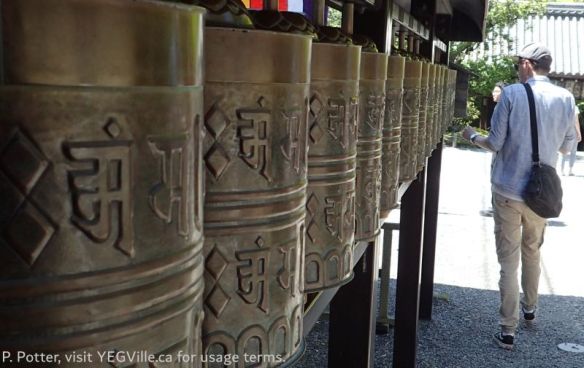
A visitor spinning the prayer wheels or 回転式経蔵 (kaiten‑shiki kyōzō), they are a cylindrical drum mounted on a vertical axis that you spin by hand which is believed to have the same merit as reciting the sutra itself; 2026-04-16, Toji Temple environ, Kyoto Japan, P. Potter. 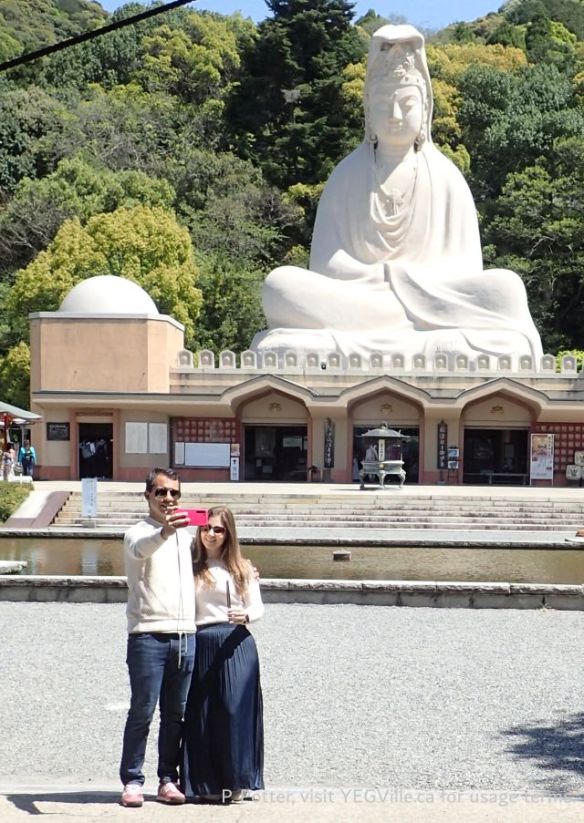
A couple posing in front of the Ryozen Kannon (霊山観音), a prominent war memorial and Buddhist temple located in the Higashiyama district of Kyoto, Japan; it honours both Japanese and Allied war dead, 2026-04-16, Toji Temple environ, Kyoto Japan, P. Potter. 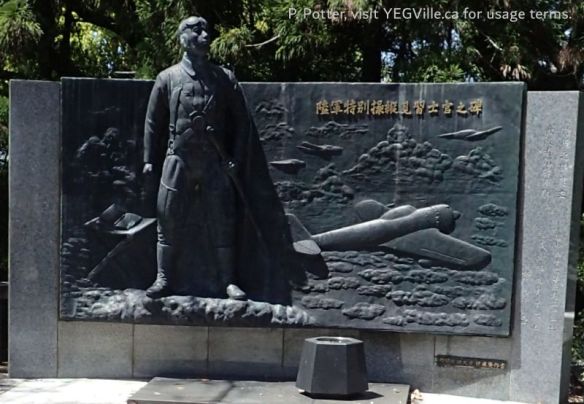
A pre-WWII monument to the Army Special Trainee Officers (Rikugun Tokubetsu Sōjū Minarai Shikan no Hi), 2026-04-16, Toji Temple environ, Kyoto Japan, P. Potter. 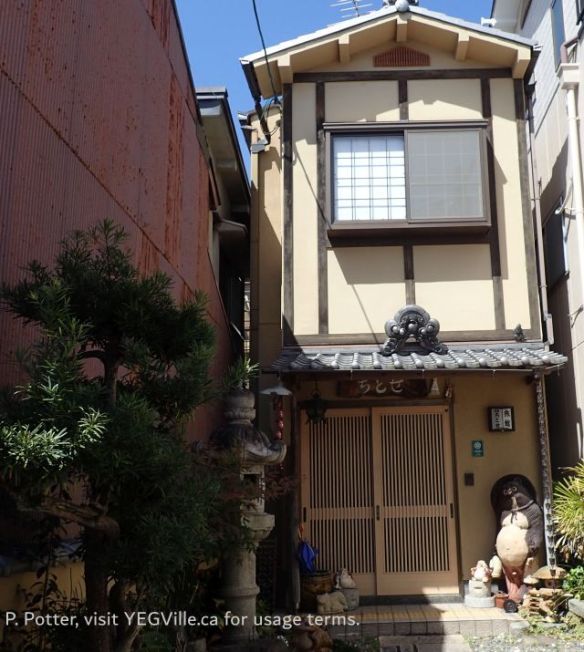
A small home recessed and set back from the very busy streets, 2026-04-16, Toji Temple environ, Kyoto Japan, P. Potter.
1,001 Buddah’s – But Who’s Counting
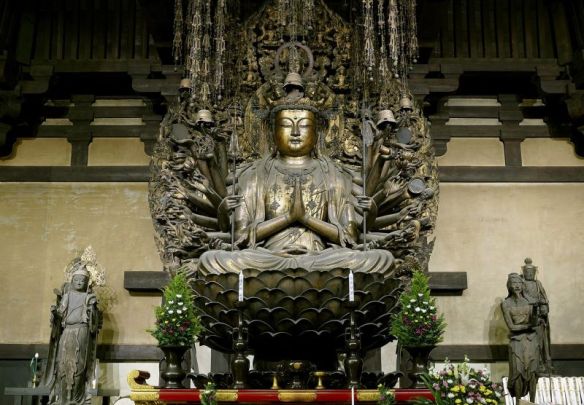
Our first stop after leaving the train was to visit with a few Buddah’s, 1,001 to be exact at the Sanjūsangendō shrine. Both the interior of the shrine with the 1,000 statues and the building itself are incredible. The latter, a 120 M long wooden hall, is a marvel of engineering. Its foundations were designed to within stand an earthquake – and are from the 13th century!
As photography is not allowed in the shrine, interior images are from the indicated sources.
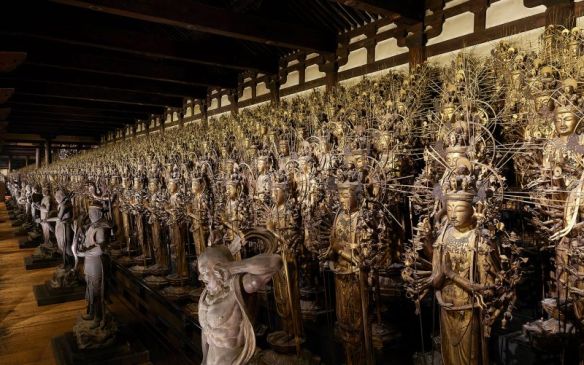
Looking down and along the standing Buddhas’, courtesy sanjusangendo.jp. 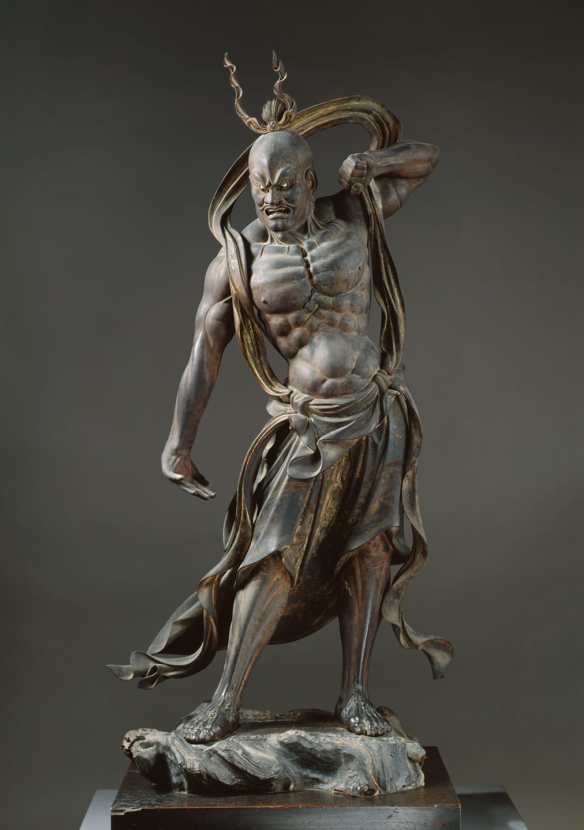
One of the28 guardian individuals, courtesy sanjusangendo.jp. 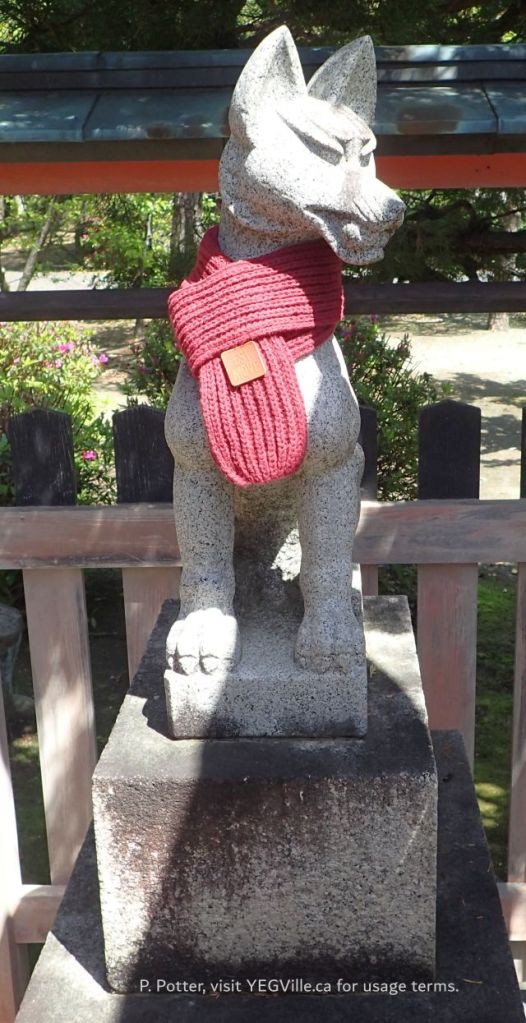
A well dressed guardian of one of the small shrines, 2026-04-16, Sanjūsangendō shrine, Kyoto Japan, P. Potter. 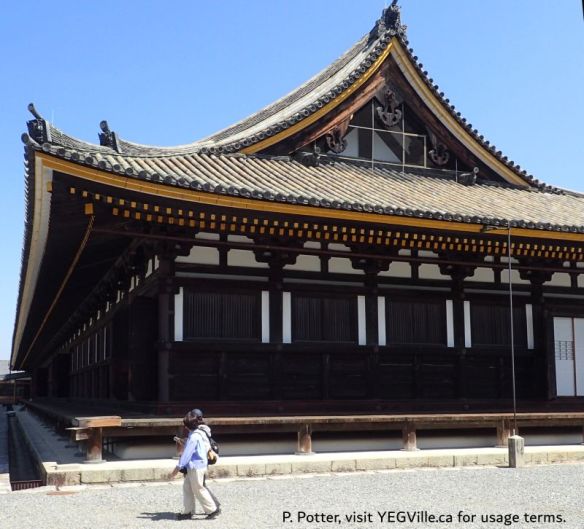
Looking down the length of the 120M long building, 2026-04-16, Sanjūsangendō shrine, Kyoto Japan, P. Potter.
The Much Copied Golden Pavilion
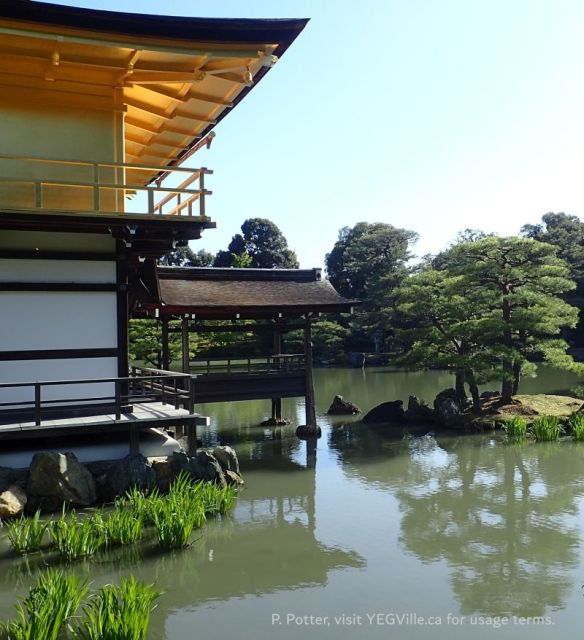
Kinkaku‑ji, Kyoto’s famed Golden Pavilion, is one of the city’s most striking and photogenic landmarks. Its top two floors are covered entirely in gold leaf, creating a brilliant reflection across the calm Mirror Pond and making the temple appear almost otherworldly in sunlight.
Originally built in 1397 as the retirement villa of shogun Ashikaga Yoshimitsu, it later became a Zen temple and today is a UNESCO World Heritage Site. The trail around the pavilion provides multiple views and perspectives.
The building tourists see is a relatively modern re-creation. In 1950 a fire was started by a young novice monk who set the Golden Pavilion ablaze, completely destroying the centuries‑old structure. The monk’s motivation for the arson remains uncertain to this day. Reconstruction began soon after, and the rebuilt pavilion was completed in 1955.
Quiet and Crushing Crowds in a Zen Garden
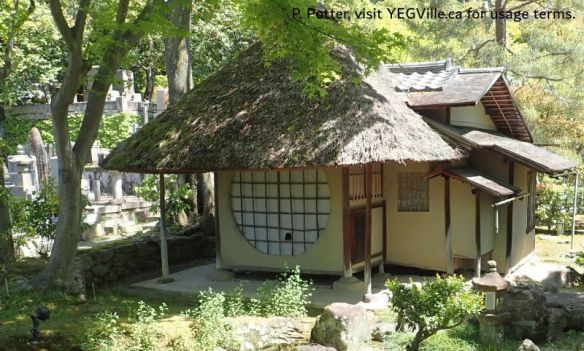
Kōdai‑ji’s Zen gardens in Kyoto blend elegant Momoyama‑period design, quiet karesansui (dry landscape) elements, and reflective pond scenery to create a serene, contemplative atmosphere. Initially, there was not a lot of Zen happening as we could not initially find the garden entrance. After trudging up (and then back down) a hill, the gate was located and we could relax… well except for the crowd moving us around the gardens. Still, one could snatch a Zen or two in the garden’s beauty and serenity.
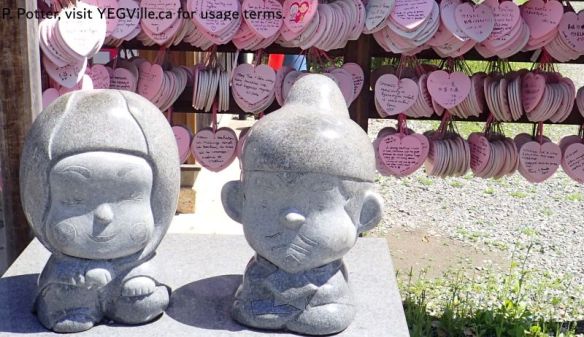
Two whimsical characters at the entrance, Kōdai ji’s Zen gardens, 2026-04-17, P. Potter. 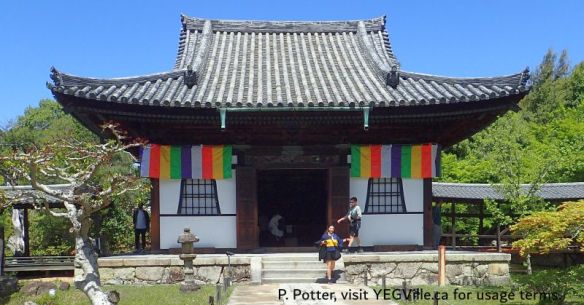
Buddhist temple hall, likely the Hōjō (Abbot’s Quarters), 2026-04-17, P. Potter. 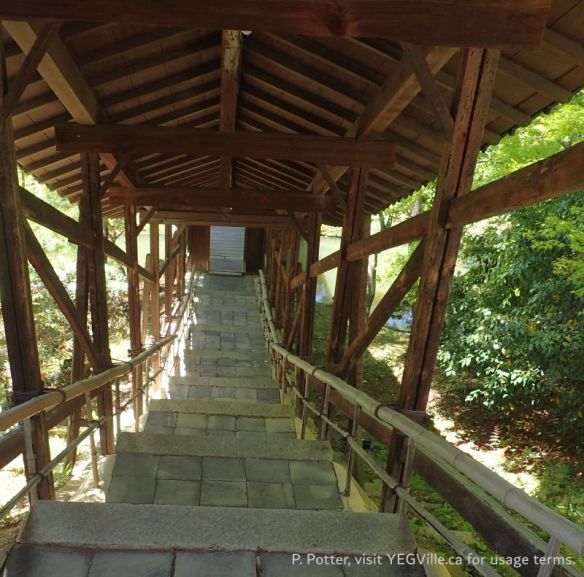
Looking down a covered bridge connecting the one building to another… with a large coy fish hiding in the bridge’s shadow, Kōdai ji’s Zen gardens, 2026-04-17, P. Potter. 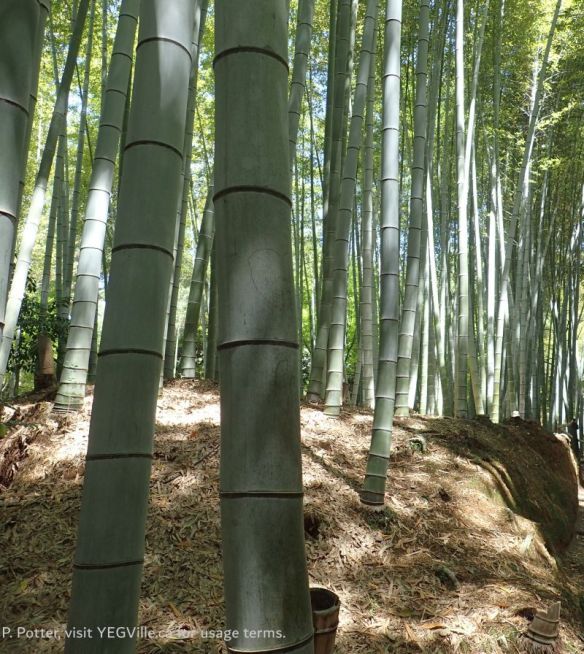
A manicured bamboo grove, Kōdai ji’s Zen gardens, 2026-04-17, P. Potter. 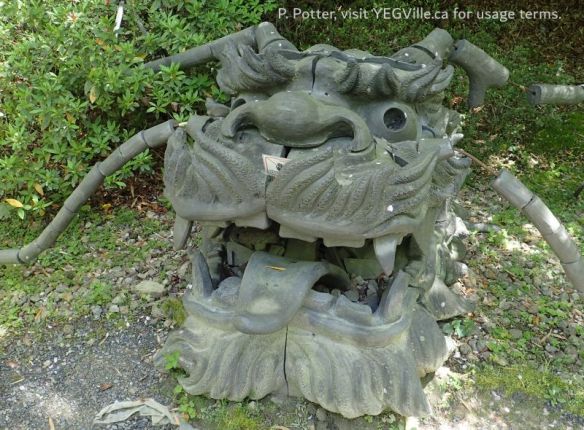
A statue dedicated to marital harmony, Kōdai ji’s Zen gardens, 2026-04-17, P. Potter.
 YEG Ville